
Mumbai (Maharashtra) [India], June 6: There is a peculiar ritual that Hollywood performs every few years. Whenever uncertainty looms, audiences become unpredictable, and streaming platforms continue nibbling away at attention spans, the industry quietly opens an old vault, dusts off a familiar franchise, and confidently announces that this time, nostalgia will save the day.
This week, that ritual is once again taking center stage.
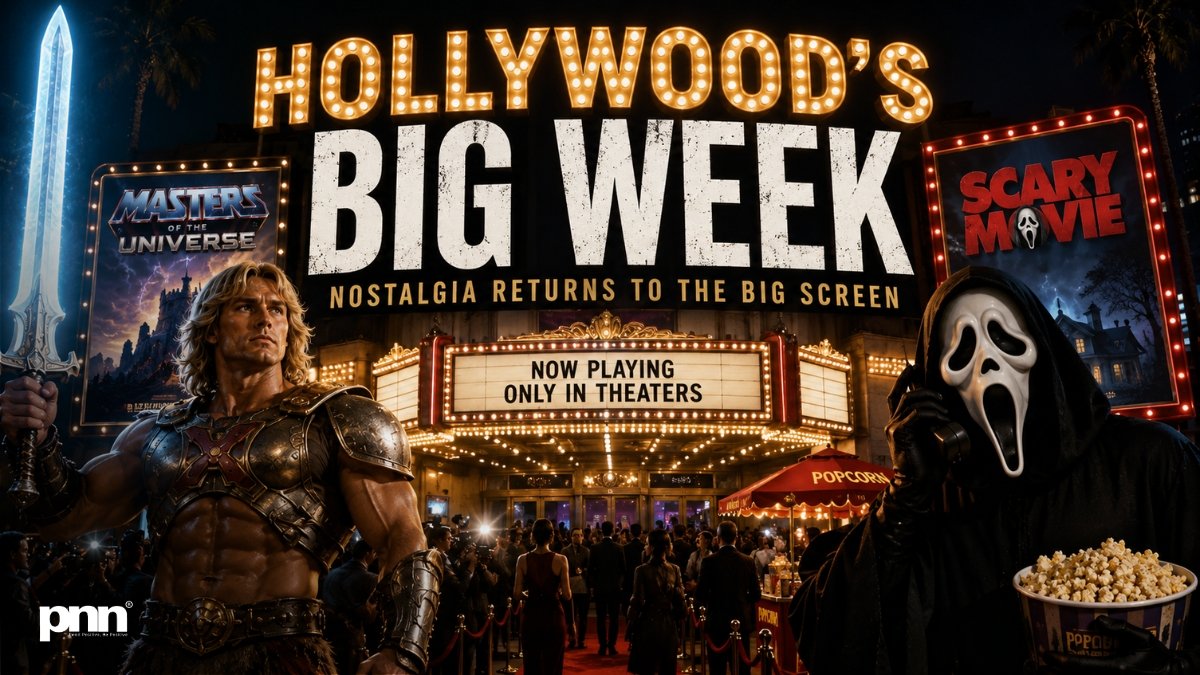
Two highly anticipated releases, Masters of the Universe and the rebooted Scary Movie, are arriving in cinemas, bringing with them decades of brand recognition, built-in fan bases, and enough nostalgia to power a small city. For studios, these films represent more than just new theatrical releases. They are test cases for one of the most important questions currently facing the entertainment industry:
How long can Hollywood keep mining the past before audiences demand something entirely new?
The answer, at least for now, appears encouraging. Nostalgia-driven entertainment has become one of the most reliable assets in modern filmmaking. From legacy sequels and character revivals to reimagined television properties, familiar intellectual property continues generating significant box-office returns.
Yet beneath the optimism lies a more complicated reality. While nostalgia remains profitable, it is also becoming increasingly crowded. Every studio wants its own cultural resurrection story. Every executive hopes lightning will strike twice. Every franchise believes audiences have been patiently waiting for its return.
History, unfortunately, has a wicked sense of humor.
Sometimes audiences return.
Sometimes they simply remember why they left.
The Era Of Familiar Faces And Familiar Stories
The arrival of Masters of the Universe and Scary Movie reflects a broader trend that has dominated entertainment throughout the past decade.
Studios are increasingly prioritizing recognizable brands over entirely original concepts.
From a business perspective, the logic is difficult to argue against. Producing a major theatrical film has become extraordinarily expensive. Marketing budgets frequently reach tens or even hundreds of millions of dollars. Global competition is intense, and audience attention is fragmented across countless platforms.
Under those circumstances, familiarity becomes valuable.
A recognizable title immediately provides awareness that original projects must spend years building. Fans already understand the characters, themes, and worlds involved. Merchandise opportunities are clearer. Marketing campaigns become easier to execute.
In essence, nostalgia functions as a form of risk management.
Hollywood, despite its reputation for creativity, has always appreciated insurance policies.
Why Nostalgia Is Thriving Right Now
The timing of these releases is particularly noteworthy.
The entertainment industry continues navigating a post-streaming transformation. Theatrical attendance has improved compared to pandemic-era lows, but consumer habits remain different from those of a decade ago.
Audiences are more selective about which films deserve a trip to the cinema.
As a result, familiarity often becomes a deciding factor.
A recognizable franchise offers something valuable in uncertain times: predictability.
Viewers know what they are purchasing.
That emotional comfort matters.
Economic pressures, global uncertainty, technological disruption, and rapidly changing media consumption habits have collectively increased demand for familiar entertainment experiences. Nostalgia provides an emotional anchor in a world that frequently feels chaotic.
It is less about reliving the past and more about revisiting emotions associated with it.
Studios understand this exceptionally well.
Their shareholders probably understand it even better.
The Return Of Masters Of The Universe
Few franchises embody nostalgia-driven entertainment quite like Masters of the Universe.
Originally emerging from toy lines, animated series, comics, and later film adaptations, the property has maintained cultural recognition for decades despite long periods of relative inactivity.
The new adaptation arrives at a time when fantasy properties continue attracting global audiences. Studios remain eager to find the next major franchise capable of generating theatrical revenue, streaming engagement, merchandise sales, licensing opportunities, and long-term brand expansion.
The stakes are significant.
Industry observers estimate that modern tentpole productions often require worldwide grosses approaching $500 million to $700 million before becoming clear commercial successes, depending on production and marketing costs.
That reality places immense pressure on every franchise revival.
Nostalgia may open doors.
It does not automatically sell tickets.
Why Scary Movie Faces A Different Challenge
The return of Scary Movie presents an entirely different situation.
Unlike fantasy franchises, parody films rely heavily on cultural relevance. Their success depends on understanding current trends, internet culture, audience expectations, and contemporary entertainment habits.
This creates a unique challenge.
The original films thrived in an era dominated by blockbuster horror movies and shared cultural references. Today’s entertainment landscape is significantly more fragmented.
Streaming platforms produce hundreds of original titles annually. Social media creates trends that emerge and disappear within days. Audience tastes evolve rapidly.
A parody franchise must therefore do more than revisit old jokes.
It must prove it still understands modern audiences.
That is easier said than done.
Comedy, after all, ages about as gracefully as expired milk.
The Business Of Remembering
From a financial standpoint, nostalgia remains one of Hollywood’s most valuable commodities.
Recent years have demonstrated that legacy franchises can generate enormous revenue when executed effectively. Sequels, reboots, spin-offs, and franchise expansions have consistently dominated box-office rankings worldwide.
Several factors contribute to this success:
- Lower consumer awareness costs.
- Established fan communities.
- Strong merchandising opportunities.
- Multi-platform expansion potential.
- Global brand recognition.
Studios increasingly view intellectual property as long-term infrastructure rather than standalone content.
A successful franchise can support films, streaming series, games, licensing deals, consumer products, and theme park attractions for years.
In many cases, the movie itself becomes merely the beginning.
The accountants undoubtedly find this beautiful.
Artists occasionally have mixed feelings.
The Positive Side Of Franchise Revivals
Critics often dismiss nostalgia-driven projects as creatively conservative, but that perspective overlooks genuine advantages.
Successful revivals can introduce beloved stories to entirely new generations. Younger audiences may discover characters and worlds they otherwise would never encounter.
Modern filmmaking technology also allows creators to realize concepts that earlier generations could only imagine.
Visual effects, production design, animation techniques, and immersive sound technologies have dramatically expanded storytelling possibilities.
Additionally, successful franchise projects create employment opportunities across production, visual effects, marketing, distribution, exhibition, and merchandising sectors.
Large-scale entertainment projects continue to support thousands of jobs globally.
When executed thoughtfully, nostalgia and innovation can coexist.
The challenge is ensuring one does not completely consume the other.
The Negative Side Nobody Wants To Discuss
For all its advantages, nostalgia carries risks.
The most obvious concern involves creative stagnation.
As studios allocate larger budgets toward established brands, original projects often struggle to secure comparable resources. Emerging filmmakers may find fewer opportunities to launch entirely new intellectual property.
This creates an industry paradox.
Hollywood consistently searches for the next major franchise while simultaneously investing most heavily in existing ones.
Another concern involves audience fatigue.
Familiarity generates excitement only when used selectively. Overuse eventually diminishes impact.
Consumers can distinguish between genuine creative passion and corporate opportunism.
Eventually.
Usually.
Sometimes, after purchasing opening weekend tickets.
What The Latest Industry Trends Reveal
Recent market analysis suggests audiences are not necessarily rejecting nostalgia. Instead, they are becoming more discerning about how it is presented.
The most successful franchise revivals typically share common characteristics:
They respect source material without becoming trapped by it.
They introduce new ideas alongside familiar elements.
They offer genuine creative vision rather than simple replication.
Most importantly, they justify their existence.
Audiences increasingly expect more than recognition.
They expect reinvention.
That expectation may ultimately determine whether this week’s releases become successes or cautionary tales.
A Bigger Question For Hollywood
The arrival of Masters of the Universe and Scary Movie ultimately represents something larger than two individual films.
They symbolize an industry searching for equilibrium between commercial security and creative ambition.
Hollywood understands the value of nostalgia.
The challenge is ensuring nostalgia remains a bridge rather than a destination.
Audiences want familiarity, but they also crave surprise.
They appreciate beloved characters, but they also want new stories worth remembering.
The future likely belongs not to franchises that merely revisit the past, but to those capable of transforming it into something meaningful for the present.
The Final Reel
As these films arrive in theaters, industry executives will watch ticket sales closely. Analysts will dissect audience demographics. Studios will search for clues about the next phase of entertainment.
The results may shape future production strategies for years.
If the films succeed, expect even more legacy properties to emerge from studio archives.
If they stumble, executives may finally be forced to take greater creative risks.
Either way, Hollywood’s relationship with nostalgia remains fascinating.
The industry keeps returning to the past in search of the future.
And somehow, despite decades of evidence, it still acts surprised when audiences demand both.
Perhaps that is the real plot twist.